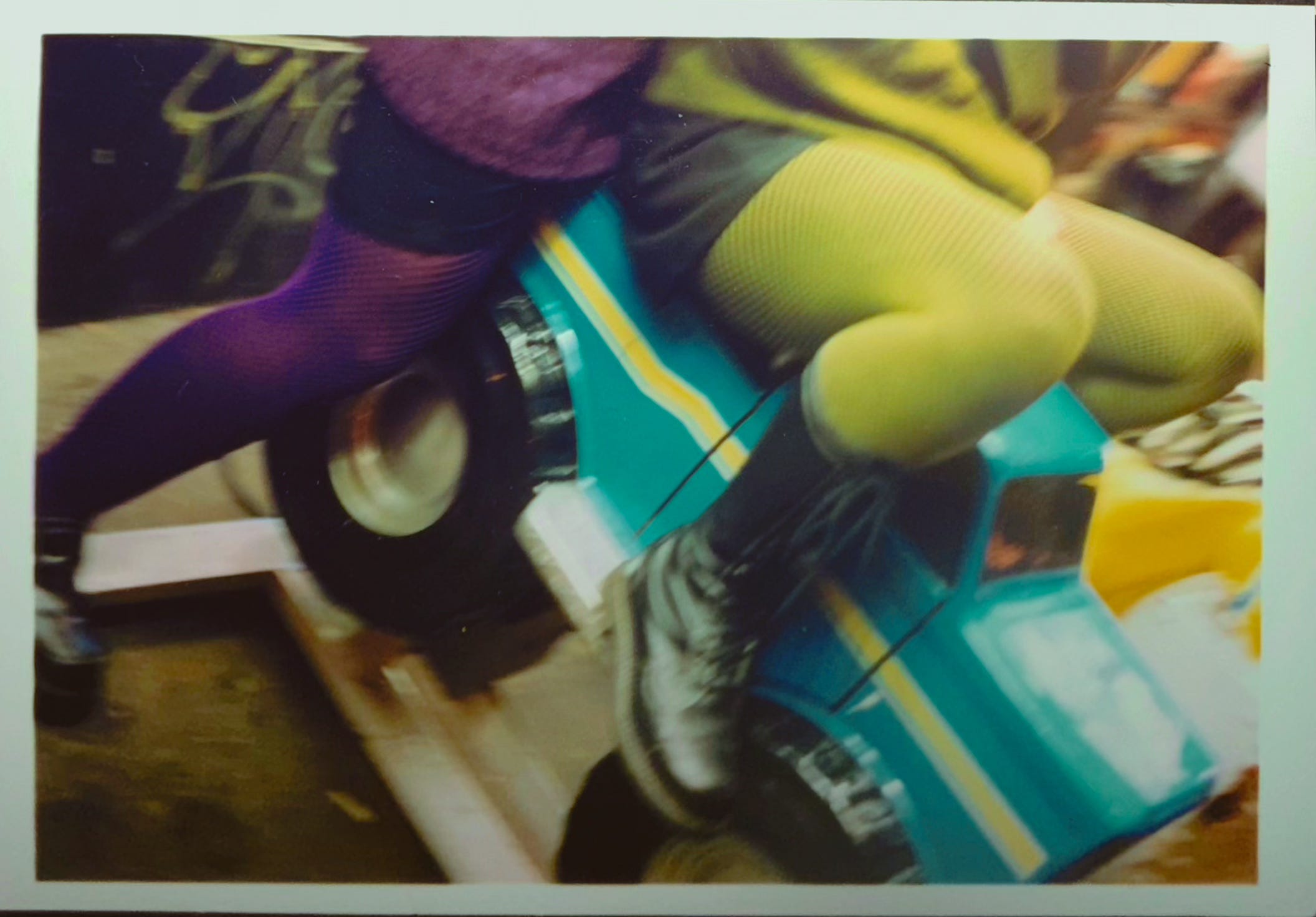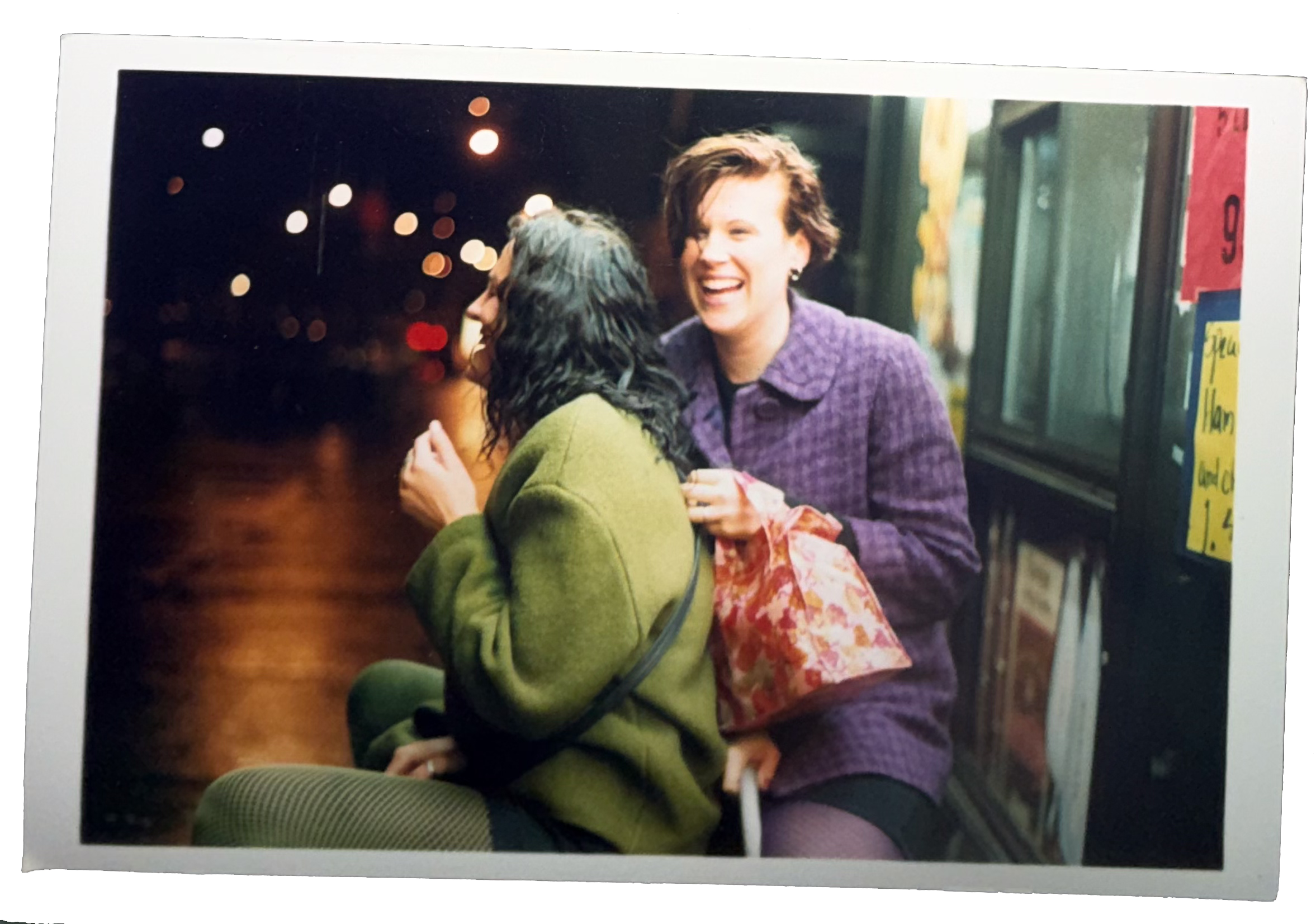

I was looking for a photograph yesterday, from a while ago - of my wife and a friend out in front of a convenience store at night riding one of those giant toy animals that moves when you put in a quarter. It was winter and my wife was wearing bright purple leggings and our friend was wearing bright green leggings. They were laughing.
I looked through our pictures and I couldn’t find it.
I searched by location, then for “bright green leggings”, and nothing came up. I began to look through all of them, year by year. Still nothing.
“What’cha doin?” my wife asked.
“I’m trying to find that picture where…”
I described the moment. She remembered it.
“Oh, yeah. That’s a picture.”
Pause.
“Yeah.” I replied.
Pause.
“It’s a PICTURE.” she said.
There was a pause here as well, augmented by my puzzled squint. Confused, I indicated the computer before me with a cautious wave of my hand.
“It’s… not in here.” I told her, with a timid Vanna White flourish.
“No, it’s with the pictures.” she said, turning to leave the room, then calling back from the hallway, “…the ACTUAL pictures. It was before all that.”
We see our digital photos all the time. Our Apple TV™ uses our digital photo library as a dynamic screen saver, the AI displaying warm memories, important milestones, and what we each consider an unnecessarily mean-spirited gallery of our least attractive shots, more ghastly in the clarity of 4K. Over the last 20 years we have amassed over one hundred thousand digital images, so we attempted to weed the undesirables out, but the thing has a mind of its own.
Our ACTUAL pictures are in a wicker IKEA cube behind the couch, gathered in envelopes, a metal box, file folders, and a lot of rubber banded bunches. They are in no way databased. If I were to ask the box to find pictures of me wearing a scarf, the box would, in its own silent and entirely imperceptible way, openly mock me. To sort through the pictures in the box, you have to touch them with your hands and point them toward your face.
My daughter watched me do this, without comment. She is familiar with the box of pictures, as well as the legacy photo albums beneath the sofa; the shadows of four generations, which together represent a comprehensive slideshow of her DNA composition.
She has scanned a few images for class projects (“these are my great grandparents…”) but it’s been a minute since we’ve taken her through any of the old-timey stories.
She kept a careful distance.
Physical photographs are wonderful. They don’t move. You can look at them in true detail because they meet you halfway. But for all they represent in clarity, they often lack context, becoming memories we don’t remember.
Digital images give us hints as to their stories - offering day, time, and location, as well as thumbnails of all the photos taken immediately before and after to further jog the memory. Paper photos have none of that.
My grandmother used ballpoint pens to add “metadata” directly to her photos - sometimes right on the front. When she didn’t actually remember who was in the picture or when it was taken, she made it up.
It didn’t matter, she said: no one else was going to remember any better than she could: and in the future, her BIC-pen-scribbled shoddy research would transform to historical fact.
Our IKEA Collection is curated, pieces of paper that have survived 12 apartments and four to five decades, a box filled with pictures of far-distant relatives, former associates, and familiar strangers. These images are interesting, but their stories hold emotion, incident, tales cautionary and fantastic, milestones, victories, and experience. And sometimes, just a feeling.
And to capture all of that, you need yourself a BIC™ pen. This column is my pen, as it is, at its core, all about history. But everyone knows that books are better with pictures, so I pulled a few pictures out to write down their stories, pass on their context and significance as best I can. (Hopefully I’ll be more accurate than my Grandmother was.)
And I did find the photo I was so desperately looking for. Upon seeing it again, I could not recall exactly where or when it was taken, or what was happening before or after the moment captured - but still, it made me smile. I realized that the details of the situation are not why I treasure it.
Actually, it’s the colors I remember.